
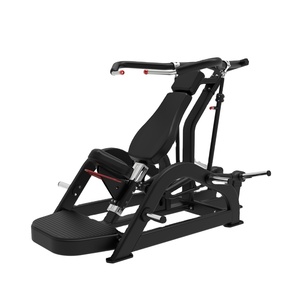
Explore our factory-direct, heavy-duty strength equipment engineered for commercial health clubs, fitness centers, and global procurement partners. Built with heavy-gauge structural steel and ergonomic precision.
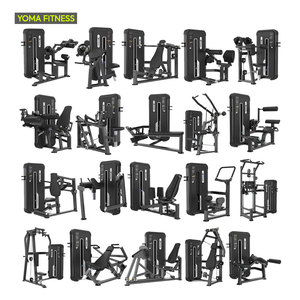
In the rapidly scaling global fitness market, projected to reach over USD 15.8 billion by 2030, selecting a verified gym equipment manufacturer and factory partner is the single most critical decision for fitness club operators, commercial distributors, and private-label brand owners. Quality flaws in commercial fitness equipment do not merely trigger warranty expenses—they compromise user safety, elevate liability risks, and erode brand equity.
As a leading international B2B equipment manufacturing enterprise, our production ecosystems bring together heavy industrial engineering, precision robotic fabrication, and biomechanical optimization. This white paper serves as an exhaustive procurement guide for international buyers, detailing structural material benchmarks, quality assurance frameworks (AQL 2.5), manufacturing methodologies, and emerging procurement trends for 2025 and beyond.
True commercial grade equipment is distinguished by structural integrity, structural steel density, biomechanical movement arcs, and surface finishing longevity. Below are the definitive engineering standards executed across our production facilities:
We utilize Q235B and Q345 commercial-grade structural carbon steel with frame wall thicknesses ranging from 2.5mm to 3.0mm (11-Gauge steel). Standard 50x100mm flat-oval and 60x120mm rectangular tubing options deliver structural rigidity capable of handling maximum load capacities exceeding 600 kg (1,320 lbs).
To prevent oxidation and sweat corrosion, all frames undergo automated shot blasting for surface rust removal, followed by a double-pass electrostatic thermosetting powder coating process. Tested under neutral salt spray (NSS) conditions for > 500 hours without surface degradation.
Plate-loaded and selectorized lines feature natural converging and diverging axes of motion. Cam systems are CAD-modeled to match human strength curves, maintaining consistent muscular tension through full ROM (Range of Motion) while minimizing stress on joint capsules.
Understanding the engineering differences between commercial grade fitness equipment and light-commercial/residential alternatives prevents misallocation of capital and premature machine failures.
| Engineering Parameter | Full Commercial Grade | Light Commercial / Studio Grade | Home / Residential Grade |
|---|---|---|---|
| Steel Wall Thickness | 2.5mm – 3.0mm (11-Gauge) | 1.8mm – 2.0mm (14-Gauge) | 1.2mm – 1.5mm (16-18 Gauge) |
| Pulley Cable Rating | 7x19 Aircraft Steel Cable (2,200 lbs) | 7x19 Standard Cable (1,500 lbs) | Standard Steel Wire (< 1,000 lbs) |
| Upholstery Construction | High-density molded PU foam + anti-microbial leather | Rebounded foam + standard PVC leather | Low-density cut foam + vinyl cover |
| Pulley Wheel Material | Aluminum Alloy or Heavy Duty Nylon w/ Sealed Bearings | Reinforced ABS / Nylon | Plastic / Non-Sealed Bushings |
| Daily Operating Capacity | 12–18+ Hours / Day Continuous Duty | 4–6 Hours / Day Intermittent | 1–2 Hours / Day Light Use |
| Recommended Environment | Commercial Gyms, Health Clubs, Military Bases | Hotels, Corporate Gyms, Apartments | Home Gyms, Personal Studios |
Procurement requirements in the commercial fitness domain are rapidly shifting beyond basic structural durability. Forward-thinking buyers and distributors are aligning their sourcing strategies with five macro industry shifts:
Modern strength equipment is increasingly expected to feature digital repetition sensors, power output monitors, and Bluetooth/RFID connectivity. OEM factories are integrating mounting points and micro-sensor housings into selectorized stack covers to stream data to club management software.
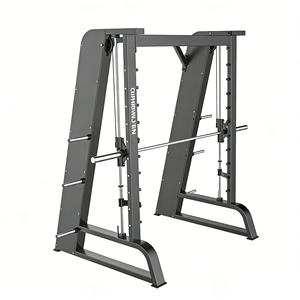
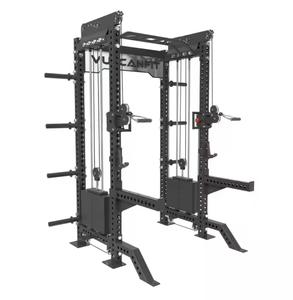
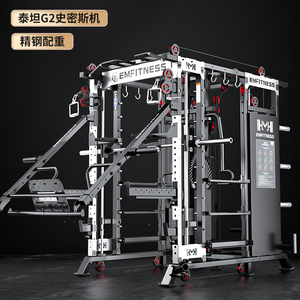
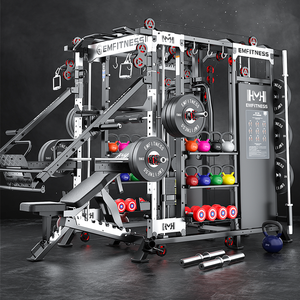
Urban commercial real estate costs demand maximum utility per square meter. Multi-functional Smith machines integrated with dual functional trainers, half racks, plate storage, and landmine attachments (such as the VF-FT02 platform) represent the fastest-growing strength category globally.
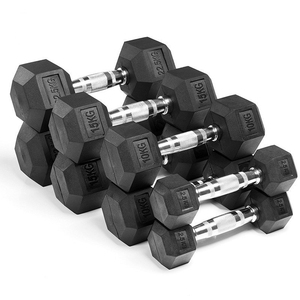
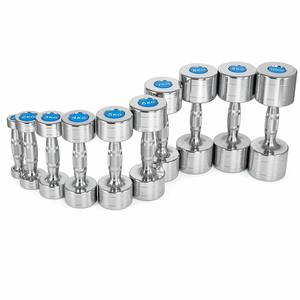
Environmental compliance regulations (REACH, RoHS) in Europe and North America are forcing a shift away from odor-heavy recycled rubber dumbbells toward virgin Thermoplastic Polyurethane (TPU) and high-grade CPU free weights that provide zero odor, high impact damping, and minimal floor damage.
The global gym manufacturing industry has transformed from traditional manual welding shops into automated precision engineering complexes. Understanding these technological advancements enables buyers to inspect factory lines effectively:
Integrating over two decades of international sports goods and strength machinery manufacturing expertise, our production facilities provide a comprehensive supply chain solution tailored for overseas importers, gym franchise groups, and regional brand owners.
Every order follows a rigorous 3-stage inspection workflow: Incoming material verification (IQC), in-line process checks (IPQC), and final pre-shipment sampling (FQC) under ISO 9001 and AQL 2.5 standards.
From customized laser-cut logo plates and custom shroud colorways to pantone-matched powder coatings, custom embroidered leather cushions, and retail barcoding packaging.
Regularly shipping full container loads (FCL) and LCL consolidations to partners in over 17+ countries across North America, Europe, Australia, the Middle East, and Asia.
Answers to common commercial procurement, quality control, shipping, and customization inquiries.
Whether you are planning a complete commercial health club buildout, expanding your distribution product line, or developing custom OEM strength machinery, our technical team is ready to deliver specs, CAD designs, and factory quotes.
Contact Us