As a premiere OEM/ODM Thigh Guards Factory & Exporter, our manufacturing ecosystems synthesize advanced biomechanical research with automated textile and polymer processing. Thigh guards—spanning high-impact ice hockey compression shorts, tactical muscle strain sleeves, copper-infused kinesiology wraps, and adjustable neoprene braces—represent a crucial segment in contemporary athletic protective equipment and orthopedic support markets.
Operating out of India’s renowned sports manufacturing hub in Jalandhar, our integrated export facilities supply global distributors, sports clubs, medical equipment importers, and retail brands across 17+ countries. By implementing strict AQL 2.5 quality control standards, ISO 9001 quality management systems, and comprehensive material testing protocols, we transform complex technical specifications into commercial-ready products designed for high-performance impact absorption and long-term durability.
Explore our core export products engineered for international brands, athletic organizations, and medical supply channels. All models feature private-label branding, customized packaging, and structural tailoring options.
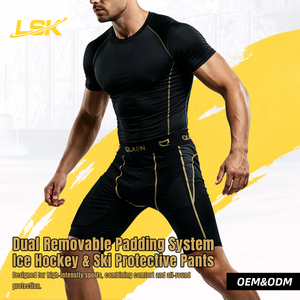
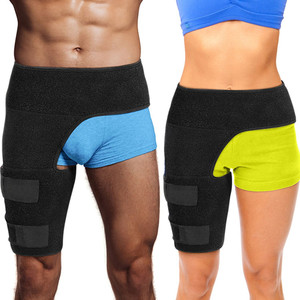
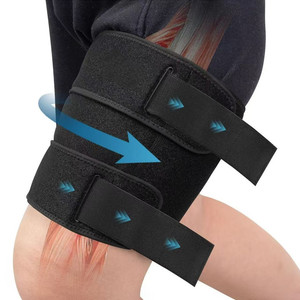
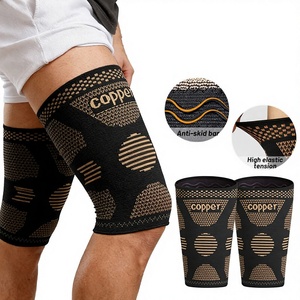
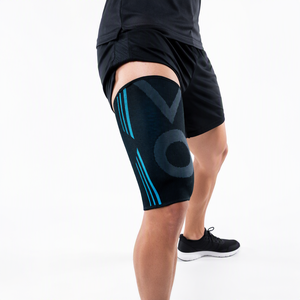
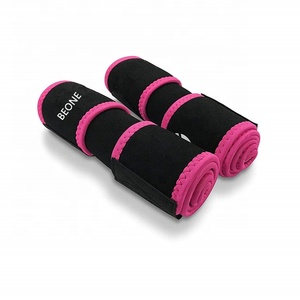
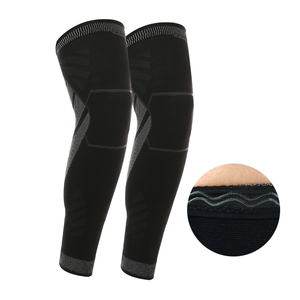
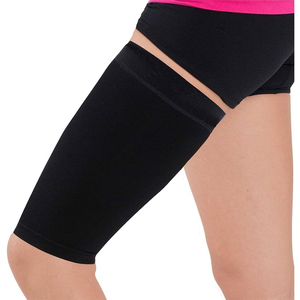
Sourcing athletic protective gear requires a clear understanding of polymer performance, shock attenuation physics, and ergonomic textile construction. Below is an authoritative analysis of modern thigh guard engineering.
Modern high-impact thigh guards utilize closed-cell Ethylene-Vinyl Acetate (EVA) and dynamic Viscoelastic Polyurethane foams. High-density EVA (65–85 Shore C hardness) is hot-molded into segmented geometric geometry to distribute linear force vectors away from the femur bone during high-impact collisions in contact sports.
Using 3D circular knitting machines (200+ needle density), compression sleeves apply controlled medical-grade compression (measured in 15–25 mmHg zones). This gradient reduces skeletal muscle vibration (micro-trauma), enhances venous blood return, and reduces delayed onset muscle soreness (DOMS).
Yarns infused with matrixed copper ions ($Cu^{2+}$) provide persistent bactericidal protection against Staphylococcus aureus and fungi. Perforated neoprene cores integrate matrix channels to release trapped moisture while retaining therapeutic heat around the hamstring and quadriceps tendons.
When selecting OEM manufacturing criteria for retail or institutional distribution, review these technical specification thresholds:
| Material Category | Impact Mitigation Standard | Breathability Rating | Tensile Recovery (1000 Cycles) | Target Athletic Application |
|---|---|---|---|---|
| Molded EVA & TPU Shells | EN 1621-1 Level 1 / Level 2 | Low (Requires Perforations) | 98.5% Retained Structural Shape | Ice Hockey, Skiing, Rugby, Tactical |
| SBR Neoprene Composite | Moderate Thermal Cushioning | Medium (Airprene Mesh) | 92.0% Elastic Memory | Groin Strain Recovery, Weightlifting |
| 3D Seamless Nylon/Spandex | Vibration Suppression | Ultra-High (Moisture Wicking) | 96.8% Stretch Resilience | CrossFit, Marathon Running, Basketball |
| Copper-Infused Microfiber | Frictional & Abrasion Resistance | High (Quick-Dry Fabric) | 95.5% Compression Retention | Kinesiology Fitness, Rehabilitation |
The global protective sports gear market is undergoing structural shifts toward sustainable raw materials, localized supply security, and customized anatomical fitting.
Global buyers in North America and Western Europe are increasingly demanding limestone-based neoprene (which eliminates petroleum refining) and recycled post-consumer polyester (rPET) compression yarns. OEM factories capable of providing certified recycled textiles gain a critical compliance advantage in tender applications.
Blood Flow Restriction (BFR) technology is moving from professional clinical sports medicine into commercial fitness channels. Modern thigh guards are evolving to incorporate adjustable occlusion straps and targeted silicone pressure dots that mimic kinesiology taping directly inside the sleeve fabric.
International importers are diversifying their manufacturing footprints away from single-country risks. India’s established sports equipment hubs—supported by skilled craftsmanship, competitive labor efficiencies, and robust port connections—offer stable, cost-efficient manufacturing alternative for European and American brands.
B2B buyers increasingly require complete turnkey packaging solutions. Rather than purchasing bulk unbranded goods, importers demand pre-labeled, retail-ready polybags with customized EAN/UPC barcodes, eco-friendly FSC-certified hangtags, and branded display boxes ready for immediate distribution upon customs clearance.
Combining legacy manufacturing craftsmanship with modern quality verification systems to deliver reliable, scalable protective gear solutions.
Situated in Jalandhar, Punjab—the cornerstone of India's athletic equipment industry—our facility leverages decades of accumulated specialized expertise in leather working, stitching, foam lamination, and technical sporting goods production.
Quality control is embedded into every operational step: 1. Incoming Material Audits (testing rubber density and fabric colorfastness); 2. In-Line Stitching Inspections; and 3. Final Pre-Shipment AQL 2.5 Sampling with full written audit reports.
We execute your complete brand specification sheet: custom pantone color matching, heat-transfer silk printing, rubberized logo patch application, customized care labels, and bespoke retail box design.
Evaluation of design specs, CAD drawings, material selection, and target price mapping.
Rapid physical sampling (7–15 days) with logo placement and structural validation.
Batch execution under AQL 2.5 parameters with scheduled progress and video reporting.
Barcode application, export master carton packing, and global freight dispatch (Sea/Air).
Clear, direct answers regarding minimum order quantities, compliance certifications, custom molding, and export shipping timelines.
Our standard MOQ for custom-knit compression thigh sleeves starts at 200 to 500 pieces per style/colorway, depending on the complexity of the fabric and branding. For specialized molded EVA foam shorts (such as ice hockey protective gear) or custom neoprene braces, typical production runs start at 100 to 300 units per size batch.
We strictly enforce a three-tier quality control protocol aligned with ISO 9001 and AQL 2.5 sampling standards. Incoming textiles, neoprene sheets, and EVA foams undergo lab testing for elasticity, tear resistance, and colorfastness. Pre-shipment inspections measure stitch density, seam tension, and dimension accuracy before sealing master export cartons.
Yes. Our in-house R&D team works from 2D CAD files or 3D STEP samples to create custom steel injection or compression molds for specialized protective padding. We adjust foam shore hardness (from soft 45 Shore C to rigid 85 Shore C) based on your target sport requirement (e.g., skiing, ice hockey, or tactical use).
We offer high-durability branding techniques including silicone anti-slip inner printing, 3D rubber/PVC embossed badges, thermal transfer logos, high-density embroidery, and custom woven brand labels. All logos undergo stretch and wash-cycle testing to ensure they will not crack or peel during use.
We regularly export sports protective equipment across 17+ countries, including the United States, United Kingdom, Canada, Australia, Germany, France, Ireland, Netherlands, Sweden, Japan, South Korea, and South Africa. Our logistics team handles export documentation, Certificate of Origin issuance, and coordination with sea (FCL/LCL) or air freight carriers.
Pre-production sample delivery generally takes 7 to 15 business days after tech pack sign-off. Bulk factory production requires 25 to 45 business days, depending on volume, packaging complexity, and custom mold requirements. Expedited production slots can be arranged for contractual repeat customers.
Ready to expand your athletic protective line, request factory-direct quotations, or order pre-production samples? Contact our export engineering team today for expert technical assistance.