
Explore our premier production lines engineered for international sports brands, national federations, professional clubs, and global wholesale distributors. Every batch is manufactured under strict ISO 9001 quality protocols.
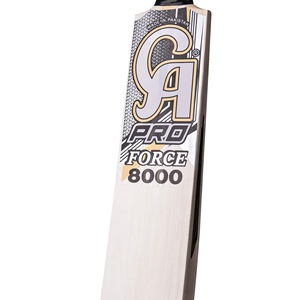
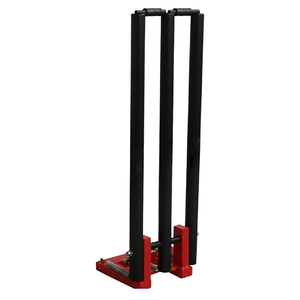
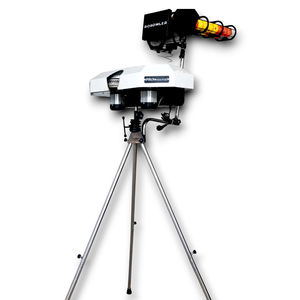
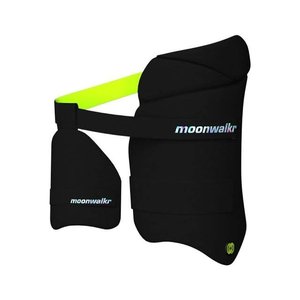
In the modern sports gear industry, evaluating a Custom OEM Rugby Balls Supplier & Suppliers demands an analytical focus that extends far beyond baseline unit pricing. As aerodynamic demands, environmental compliance frameworks, and synthetic polymer sciences rapidly evolve, sports brands, tournament organizers, and international equipment distributors must navigate complex engineering criteria. Rugby balls—spanning Rugby Union, Rugby League, Sevens, and Touch Rugby variants—are subject to rigorous structural stress during match play, including high-velocity drop kicks, extreme humidity fluctuations, intense ground impacts, and prolonged tensile tension across hand-stitched or thermo-bonded seams.
Originating from the world-renowned sports manufacturing cluster in Jalandhar, Punjab, India, our facility—operating under the established Classpo India manufacturing infrastructure—combines decades of traditional artisan hand-craftsmanship with modern polymer vulcanization, dynamic balance testing, and computer-controlled panel cutting. This technical whitepaper explores the anatomical engineering, multi-ply carcass construction, proprietary surface graining, and future procurement paradigms that define industry-leading OEM rugby ball production.
A professional-grade rugby ball relies on a multi-component composite architecture designed to balance spheroidal aerodynamics, flight predictability, maximum energy transfer, and permanent shape retention. Standard off-the-shelf promotional balls often deteriorate under wet conditions or lose pressure during dynamic play due to single-layer backing and sub-standard bladders. Enterprise OEM production requires a meticulously balanced multi-ply system:
Formulated with virgin natural rubber blended with high-grade synthetic Gutta-Percha and silica additives. Provides superior micro-grip traction, thermal stability (-10°C to +45°C), and water repellency in severe wet-weather play.
Engineered using 3-ply to 4-ply cross-laminated polyester and high-density cotton fabrics bonded with natural latex adhesives. Ensures structural memory, preventing ellipsoid distortion under high-impact kicking.
High-flex synthetic latex bladders offering rapid rebound energy for elite match performance, or heavy-duty butyl bladders providing extended air tightness (holding optimum pressure for up to 6 months without reinflation).
The table below illustrates the exact structural specifications utilized by Custom OEM Rugby Balls Suppliers across match, training, and promotional product Tiers:
| Tier / Grade | Outer Surface Material | Carcass Backing | Bladder Type | Grip Pattern Profile | Target Weight (Size 5) |
|---|---|---|---|---|---|
| Elite Match Grade | High-Grade Rubber + Gutta Percha Blend | 4-Ply (Poly-Cotton & Fabric Laminate) | High-Retention Natural Synthetic Latex | 3D High-Spin Micro-Pimple Grip | 440g – 460g |
| Club & Training Grade | Durable Synthetic Rubber Compound | 3-Ply Cross-Laminated Polyester/Cotton | High-Density Butyl Bladder | Standard Conical Pimpled Grain | 410g – 440g |
| Mini & Promotional Grade | Soft PVC / TPU or Standard Rubber | 2-Ply Polyester Backing | Synthetic Rubber Bladder | Light Embossed Texture | 360g – 400g |
Handling performance in modern rugby is heavily governed by the friction coefficient of the ball surface under dynamic match conditions. When players execute high-speed passing, catching, and spiral kicking, moisture from rain, dew, or sweat reduces mechanical traction. Professional OEM manufacturing incorporates specialized 3D pimple patterns—ranging from truncated conical nodes to directional triangular matrix grips.
By utilizing precision vulcanization molds, our manufacturing process ensures uniform node height (typically 0.4mm to 0.7mm) and consistent node density across all four panels. This hydrophobic surface structure sheds surface water instantly, maintaining tactile friction even in adverse weather. Furthermore, panel weight distribution is balanced to within ±2 grams, guaranteeing smooth gyroscopic rotation during long-distance spiral passes and tactical touch-finding kicks.
As a specialized Custom OEM Rugby Balls Supplier, Classpo India offers complete private-label branding flexibility for sporting goods distributors, international retail brands, and club networks. Our end-to-end OEM customization matrix covers:
Quality assurance in sports goods manufacturing is a continuous technical process rather than a final visual check. Following international export best practices, all production runs undergo a rigorous three-stage quality control plan based on the AQL 2.5 (Acceptable Quality Limit) inspection methodology:
Stage 1: Incoming Raw Material Verification: Rubber compounds, virgin latex, polyester fabrics, and adhesives undergo physical tensile testing, chemical purity checks (REACH and heavy-metal compliance), and thickness uniformity checks prior to line distribution.
Stage 2: In-Process Assembly Controls: Panel cutting precision, backing lamination adhesion, hand-stitching tension, and valve seating integrity are monitored continuously on the factory floor.
Stage 3: Pre-Shipment Testing & Pressure Retention: Every inflated ball is subjected to a compulsory 24-hour to 48-hour pressure-drop monitoring test inside temperature-controlled testing bays. Random samples undergo mechanical drum impact testing (over 2,500 continuous high-velocity impacts against steel walls) to ensure zero seam splitting or circumference expansion.
The global sports equipment supply chain is undergoing a fundamental structural transformation driven by sustainability requirements, smart sensor tracking technologies, and supply chain diversification:
Transitioning from traditional petroleum-based synthetic rubbers to bio-based TPU, natural plantation rubber, and recycled polyester backing fabrics derived from post-consumer plastic bottles.
Embedding low-profile RFID micro-chips and Bluetooth inertial motion sensors into match ball bladders to collect real-time kick distance, spin rate, and pass velocity telemetry for broadcast analytics.
Bypassing middleman trading agents in favor of direct manufacturer partnerships with verified Indian production hubs in Jalandhar, ensuring transparent lead times, lower MOQs, and direct QA access.
Clear, authoritative responses to the most critical technical and commercial questions posed by global procurement managers, sports distributors, and brand owners.
Our standard Minimum Order Quantity (MOQ) typically begins at 300 to 500 pieces per size/design for fully customized rubber rugby balls with custom screen printing and pantone matching. For high-tier match balls utilizing stock rubber panel formulations with custom logos, lower entry MOQs (100 to 200 pieces) can be accommodated to support initial sample line trials.
Hand-stitched rugby balls utilize heavy-duty waxed polyester threads to secure multi-ply panels, offering exceptional seam flexibility, tactile feel, and proven durability in standard match conditions. Thermo-bonded rugby balls use heat-activated adhesives to fuse panel edges seamlessly, eliminating stitch holes. This results in virtually zero water absorption, maximum aerodynamic sphericity, and superior shape retention in extreme wet-weather play.
Every match-grade rugby ball engineered in our Jalandhar facility is designed in strict accordance with World Rugby (WR) Regulation 12 dimensions: Length (280mm to 300mm), End-to-End Circumference (740mm to 770mm), Width Circumference (580mm to 620mm), and Weight (410g to 460g). Pressure retention and dynamic rebound parameters are verified using calibrated digital testing apparatus.
Pre-production physical sampling generally requires 7 to 14 working days, including custom artwork layout, plate creation, and full physical construction. Once the golden sample is officially signed off, bulk mass production takes approximately 25 to 45 calendar days depending on order volume and complex branding requirements. Dispatches are arranged via Sea LCL/FCL or Air Freight with complete export documentation.
Yes. As a full-service OEM supplier, we tailor carcass backing layers, rubber compound hardness (Shore A scale), and grip pimple profiles to match your specific target market. We can produce heavy-weight passing training balls (up to 1kg), ultra-grip wet-weather match balls, or lightweight junior development balls according to your exact tech pack specifications.
We welcome independent third-party inspection agencies (such as SGS, Intertek, or Bureau Veritas) to audit our facility and inspect finished production lots before container loading. Furthermore, chemical safety tests (REACH SVHC, Phthalates, Heavy Metals) can be executed through accredited testing labs upon buyer request.
Rooted in the industrial heartland of Jalandhar, Punjab, Classpo India represents decades of accumulated manufacturing expertise across ball sports, combat gear, sports bags, and teamwear. Overseas buyers choose to partner with our facility because we deliver transparent communication, rigid specification adherence, and verified pre-shipment quality checks on every order.
Whether you are launching an innovative rugby equipment range, expanding a school training catalog, or seeking a reliable direct manufacturer to streamline your supply chain costs, Classpo India provides the engineering precision, scalable manufacturing capacity, and global export infrastructure required to elevate your brand in competitive international markets.
Connect directly with our senior engineering and export desk in Jalandhar. Receive comprehensive specification reviews, material guidance, pre-production sample schedules, and competitive factory-direct pricing within 24 hours.