Featured OEM/ODM Equipment
Featured Sports Equipment & Manufacturing Portfolio
Our state-of-the-art production lines manufacture high-performance sports equipment, balls, and protective gear engineered strictly to international competition and training standards. Browse our core wholesale offerings below and request factory-direct quotations.
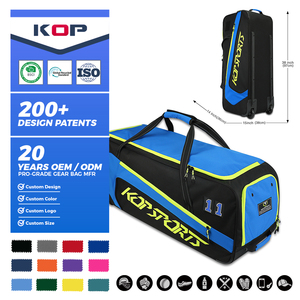
KOP OEM Custom Wholesale Heavy Duty Large Capacity Rolling Cricket Kit Bag
Engineered with 1680D heavy-duty nylon, tractor wheels, and reinforced base structure for player team transport.
Get a Quote
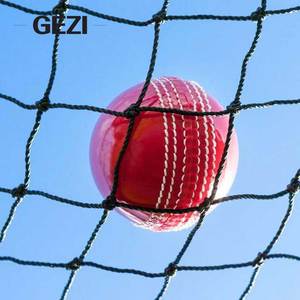
Backyard & Indoor Nylon Knotted Cricket Batting Cage Tunnel Practice Net
UV-stabilized high-density polyethylene netting built for heavy ball impact resistance and outdoor durability.
Get a Quote
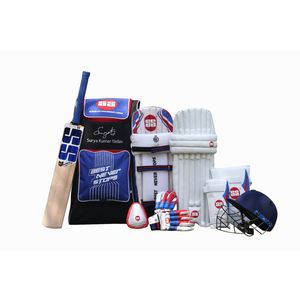
SS SKY Boy's Full Cricket Kit with Kashmir Willow Premium Bat (Size 3)
Complete youth tournament set featuring handcrafted Kashmir willow bat, protective pads, and carrying gear.
Get a Quote
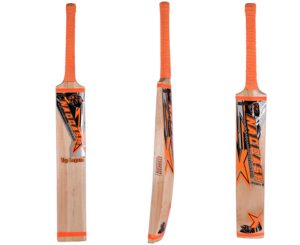
Kashmir Willow Leather Ball Cricket Bat with Protective Sheet Face
Precision-balanced adult match bat crafted for leather ball responsiveness with anti-scuff protection sheeting.
Get a Quote
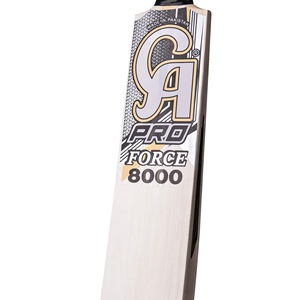
CA Pro Force 8000 Heavy Power Tennis & Tape Ball Cricket Bat
Optimized sweet-spot engineering designed specifically for high-velocity tennis ball and tape ball matches.
Get a Quote
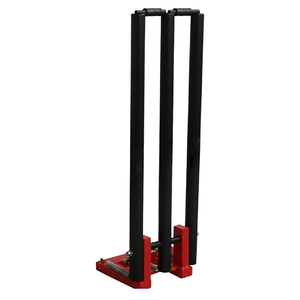
High Performance Ash Wood & Polyurethane Cricket Wickets Set
Tournament-grade timber stumps with weather-resistant plastic bails tailored for training and league use.
Get a Quote
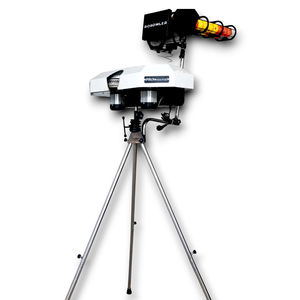
Robowler Professional Automatic 140 Kph Speed Cricket Bowling Machine
Microprocessor-controlled digital bowling machine delivering up to 140 km/h seam and swing variation.
Get a Quote
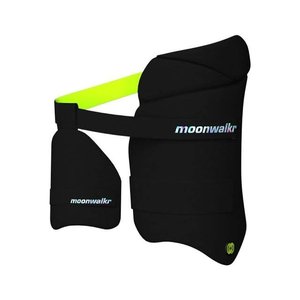
Moonwalker Pro 2.0 Ergonomic Double Thigh Guard Protective Gear
Ultra-lightweight dual-density composite foam protection offering high-impact absorption and unrestricted mobility.
Get a Quote
14+
Dedicated Production Lines
17+
Global Export Markets
AQL 2.5
Inspection Standard
100%
Pre-Shipment Compliance
Executive Summary: Sourcing Sports Balls & Equipment from China Manufacturing Hubs
Navigating the global sporting goods supply chain requires a deep understanding of manufacturing capabilities, material science, quality control protocols, and international regulatory compliance. As leading OEM and private-label partners in China and South Asia, top manufacturers offer unprecedented manufacturing scale, advanced material engineering (such as thermo-bonding and polyurethane composite structures), and flexible production capacity for global brands, wholesale distributors, and sports clubs.
Information Gain Insight: The global sports ball market is undergoing a structural transition from traditional hand-stitched PVC models to eco-friendly, thermally bonded PU and TPU structures. Top-tier factories now incorporate micro-textured aerodynamic surfaces, zero-water-absorption lamination, and automated seam testing to ensure consistent sphericity and flight accuracy.
This technical whitepaper examines the core manufacturing competencies of premium sports ball and equipment production facilities. From raw material selection to final AQL 2.5 quality audits, we provide enterprise procurement officers with the critical metrics required to select a reliable contract manufacturing facility.
Factory Capabilities & Infrastructure Strengths
Building a resilient supply chain demands transparency, technical precision, and certified quality management systems. Modern manufacturing hubs operate across specialized divisions—covering soccer balls, cricket gear, rugby balls, boxing equipment, and training accessories—driven by rigorous quality standards aligned with ISO 9001, BSCI, and FIFA/WFSGI guidelines.
Advanced Stitching & Lamination
Utilizing automated thermal bonding, hybrid stitching, and precision hand-craftsmanship. Thermal bonding eliminates seam stress and prevents moisture ingress under wet match conditions.
AQL 2.5 Three-Stage Quality Control
Incoming raw material verification, in-line process monitoring, and pre-shipment random audits. Every batch undergoes air retention, seam burst, and sphericity testing.
Complete OEM & Private Label Support
Full customization programs including Pantone color matching, brand artwork adaptation, custom panel embossing, barcode generation, and retail-ready packaging.
Future Procurement & Manufacturing Trends (2025–2030)
Global sports equipment procurement is evolving rapidly in response to environmental mandates, supply chain diversification, and material innovations. Enterprise buyers must align their sourcing strategies with the following four micro-trends:
1. Sustainable & Bio-Based Raw Materials
Brands are phasing out traditional PVC in favor of recyclable TPU, solvent-free polyurethane (PU), and bio-based rubber bladders. Major international leagues require compliance with REACH, Proposition 65, and phthalate-free standards. Leading Chinese factories are investing heavily in water-based inks and recycled polyester backing fabrics.
2. Smart Sports Balls & Sensor Integration
Training equipment and match balls are increasingly integrated with micro-sensors, RFID chips, and motion-tracking technology to record velocity, spin rate, and impact trajectories. Contract manufacturers must design specialized inner bladder pockets that house sensor arrays without disrupting ball balance or weight distribution.
3. High-Speed Automated Thermo-Bonding
While hand-stitching remains vital for traditional leather cricket balls and premium sliotars, soccer and volleyball production has shifted heavily toward automated thermal bonding. Thermal bonding standardizes panel tension, delivers seamless aerodynamic flight, and achieves dynamic water absorption rates under 1%.
4. Supply Chain Agility & Mixed-Container Shipments
Distributors and sports brands are minimizing inventory carrying costs by ordering multi-category, mixed-container consignments. Factories offering consolidated manufacturing—combining match balls, protective gear, kit bags, and training accessories under unified quality standards—provide a significant logistical advantage.
Technical Sourcing Specification & Material Benchmarks
To assist purchasing directors in drafting technical specifications for factory RFQs, the matrix below outlines standard manufacturing parameters across major sports ball and equipment categories.
| Category |
Construction Technology |
Outer Material Options |
Bladder / Core Type |
Quality Standards |
Typical MOQ |
| Professional Soccer Balls |
Thermal Bonded / Hybrid |
1.2mm–1.5mm Microfiber PU |
Taiwan Butyl / High-Retention Latex |
FIFA Quality Pro / EN71 |
300–500 Pcs |
| Training Footballs |
Machine Stitched / Hybrid |
0.20mm TPU + EVA Foam |
Synthetic Rubber Bladder |
EN71 / REACH Compliant |
500 Pcs |
| Leather Cricket Balls |
4-Piece Hand Stitched |
Alum Tanned Bovine Leather |
Layered Cork & Wool Core |
MCC Match Regulations |
100–200 Pcs |
| Rugby Match & Training Balls |
3-Ply Hand Stitched |
Grip-Textured Rubber Compound |
Hi-Tech Natural Latex |
World Rugby Spec |
300 Pcs |
| Boxing Gloves & Combat Gear |
Hand Machine Stitched |
Genuine Leather / Microfiber PU |
Multi-Layered Injection Mold Foam |
CE / Impact Safety Standard |
100–300 Pairs |
| Sports Equipment Kit Bags |
Heavy Duty Reinforced Stitching |
1680D / 600D Polyester + PVC Backing |
Tractor Wheels & Steel Chassis |
Drop & Load Tested |
100 Pcs |
Standardized OEM & Private-Label Manufacturing Process
Our standardized 4-step manufacturing protocol ensures seamless execution from technical design approval to global logistics dispatch.
01
Design & Technical Brief
Client submits tech packs, vector artwork, colorways (Pantone), panel configurations, and performance targets.
02
Prototyping & Sampling
Physical pre-production samples are created within 7–15 days for weight, rebound, seam, and print verification.
03
Bulk Production Run
Upon written sample sign-off, bulk production runs with inline quality checks at cutting, stitching, and inflation stages.
04
AQL Audit & Dispatch
Final random inspection (AQL 2.5) is performed. Barcoded export cartons are loaded for sea FCL/LCL or air freight.
Frequently Asked Sourcing Questions (FAQ)
Below are practical answers addressing key operational and technical questions asked by commercial importers and brand procurement teams.
Q:
What manufacturing standards and quality control protocols do top China sports ball suppliers follow?
Leading factories operate under ISO 9001 management frameworks and utilize an AQL 2.5 (Acceptable Quality Limit) sampling system for pre-shipment audits. Quality control checks cover material thickness, tensile strength, print adhesion, seam burst strength, static weight tolerances, sphericity variations, and air pressure retention over a 72-hour test period.
Q:
What are the minimum order quantities (MOQ) and production lead times for customized private label orders?
Standard OEM minimum order quantities generally range from 300 to 500 pieces per design for thermo-bonded and hand-stitched balls, and 50 to 100 sets for specialized gear like player equipment bags or cricket protective kits. Sampling typical takes 7 to 15 working days, while bulk manufacturing spans 25 to 45 calendar days depending on design complexity and order volume.
Q:
Can factories customize products to match official tournament or league specifications?
Yes. Production lines can be customized to meet specific regulatory guidelines, including FIFA Quality Pro standards for footballs, World Rugby specifications for match balls, and MCC guidelines for leather cricket balls. Factories conduct in-house lab tests for rebound height, water absorption percentage, circumference stability, and impact resistance.
Q:
What options are available for eco-friendly and non-toxic material compliance?
We provide full raw material compliance support, offering REACH-certified PU/TPU materials, EN71-compliant PVC, phthalate-free compounds, and heavy-metal-free water-based inks. Importers targeting European, North American, or Australian markets can request third-party lab test certificates (SGS, TUV, or Intertek) prior to shipment dispatch.
Q:
How are products packaged to prevent damage during long-distance ocean freight transport?
Balls are deflated (or partially inflated upon request) and individually packed in moisture-barrier polybags with silica gel desiccants. They are then packed into heavy-duty 5-ply double-wall corrugated master export cartons formatted with custom shipping marks, barcodes, and palletized shrink-wrapping to resist transit humidity and pressure.
Q:
Do you support consolidated mixed-product container shipping for multi-category distributors?
Absolutely. We specialize in coordinating multi-category OEM orders—allowing buyers to combine match balls, protective padding, equipment kit bags, and training accessories into a single FCL (Full Container Load) consignment, optimizing freight costs and simplifying customs documentation.
Partner with a Trusted Sports Equipment Manufacturer
Send us your product specifications, target order volume, or reference sample requirements. Our international export team will provide a competitive factory quotation and technical feasibility assessment within 24 hours.