Direct export lines engineered for international sports brands, distribution hubs, and club chains. All units undergo multi-stage quality assurance checks prior to bulk packing.
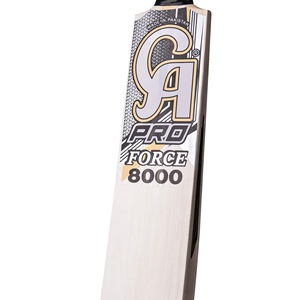
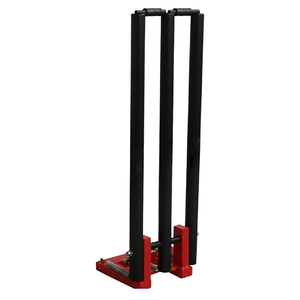

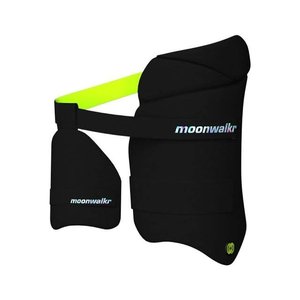
In high-performance sports equipment manufacturing, securing CE Certification (Conformité Européenne) is not merely a legal requirement for market entry into the European Economic Area (EEA); it is a rigorous validation of structural integrity, non-toxic material composition, and consumer safety. For procurement managers sourcing enterprise-grade squash rackets, racket sports equipment, and protective gear, compliance under European Union safety directives (such as Directive 2001/95/EC on General Product Safety) serves as the baseline for operational risk mitigation.
CE certified manufacturing facilities operate under stringent Quality Management Systems (QMS) aligned with ISO 9001:2015. When applied to high-stress racquet sports equipment—where high-velocity ball impacts exceed 200 km/h—mechanical strain testing, resin toxicity evaluation, and frame shatter resistance protocols are mandatory. Certified factories must enforce comprehensive batch testing procedures to eliminate structural delamination risks and frame fatigue.
Under CE safety parameters, carbon composite frames undergo repetitive impact drop tests and high-frequency stress cycle testing. This prevents violent frame splintering during court wall impacts, protecting players from sharp composite shrapnel.
All synthetic grip wraps, polyurethane bumper guards, and epoxy resin matrices must comply with EU REACH regulations (EC 1907/2006). Products are verified free from banned Phthalates, Heavy Metals, Polycyclic Aromatic Hydrocarbons (PAHs), and Azodyes.
| Testing Domain | International Standard | Technical Test Description | B2B Quality Metric / Acceptance Threshold |
|---|---|---|---|
| Structural Fracture Safety | EN ISO 12100 / EU GPSD | High-velocity wall impact simulation at multi-angle orientations | Zero catastrophic structural fragmentation at impacts up to 220 km/h |
| Chemical Toxicity | REACH SVHC Candidate List | Mass spectrometry testing for SVHC (Substances of Very High Concern) | Concentration below 0.1% weight-by-weight (w/w) across all polymer components |
| Grip Ergonomics & Friction | BS EN 15534 / ISO 20344 | Sweat-resistant surface coefficient of friction & tensile peel strength | Minimum dynamic friction index > 0.75 under high-humidity play simulations |
| Grommet & Bumper Durability | ASTM F1882 / ISO 812 | Low-temperature impact resilience & string shearing abrasion test | Zero grommet cracking at string tensions reaching 35 lbs / 16 kg force |
Modern squash racket manufacturing has evolved from legacy aluminum tubing to highly sophisticated multi-axial carbon fiber composite layups. Achieving the optimum stiffness-to-weight ratio requires deep expertise in fiber tow selection, matrix resin chemistry, and bladder molding pressure distribution.
Utilizing premium Torayca T700 & T800 High-Modulus Carbon Fiber, frames achieve exceptional tensile modulus (230-290 GPa) while maintaining lightweight geometry (115g - 140g finished unstrung frame weight).
Epoxy resin systems infused with carbon nanotubes (CNTs) enhance inter-ply shear strength. This micro-structural reinforcement dampens high-frequency arm shock by up to 32% without sacrificing torsional feedback.
Internal high-pressure pneumatic bladders (operating at 18-22 bar during thermal curing) eliminate internal void formation, resin pockets, and wall thickness variations across the bridge and throat sections.
Procurement directors must align frame geometry specifications with their target end-user segments. Our export manufacturing facilities offer custom tooling for both main frame typologies:
The global racket sports market is undergoing a structural transition driven by digital manufacturing, sustainable materials, and customized player ergonomics. Key technology trends influencing B2B sourcing decisions over the next five years include:
Environmental standards in Western markets are pushing brands toward eco-friendly carbon substrates. Innovations include bio-based epoxy resins derived from flax-seed oil and recycled carbon fiber (rCF) inner-core wraps, reducing overall carbon footprint during manufacturing by up to 24%.
Computational Fluid Dynamics (CFD) modeling is now widely applied to frame cross-sections. Convex beam profiles and recessed grommet channels decrease drag coefficients by 8-12%, enabling faster head speeds during rapid volley exchanges.
OEM factories are integrating specialized mold cavities within the racket handle butt-cap to house micro-IoT motion sensors. These sensors track swing velocity, ball impact location, and stroke type without altering frame balance point calibration.
Custom grommet tooling now allows for fan-shaped main string distributions. This widens the sweet spot toward the upper hoop section of the racket head, reflecting modern aggressive court positioning strategies.
B2B buyers sourcing sports gear and specialized squash rackets face evolving geopolitical, economic, and logistical landscapes. Navigating global supply chains requires shifting from transactional ordering to strategic manufacturing partnerships.
Mass-market stock items are being replaced by customized, low-MOQ batch runs tailored to regional market preferences. Overseas brand owners require factories capable of rapid 3D prototyping, customized cosmetic decals (pantone-matched matte/gloss finishes), and laser-etched serial numbering within 10-15 working days.
Global procurement teams are mitigating single-country sourcing risks by leveraging established industrial sporting goods clusters such as Jalandhar, India. With centuries of sporting goods craftsmanship combined with modern ISO-certified composite facilities, regional manufacturing hubs offer competitive freight logistics, stable labor environments, and favorable export duty tariffs.
Enterprise buyers are mandating stringent Acceptance Quality Limit (AQL) protocols prior to container sealing. Quality inspection reports must detailing weight tolerances (within ±2 grams), balance point variances (within ±2mm), string tension retention, and packaging drop resilience before release.
Classpo India (Operating from Jalandhar, Punjab) stands as a premier sports equipment manufacturer and exporter supplying comprehensive sporting ranges across 17+ countries worldwide. Our production architecture unites traditional athletic manufacturing expertise with modern polymer engineering.
Complete custom branding integration: custom frame artwork, custom grip embossing, printed thermal racket covers, barcode tagging, and display-ready retail packaging.
Every order undergoes rigorous raw material verification upon entry, in-line process monitoring during composite lay-up, and final pre-shipment inspections following AQL 2.5 standards.
Combine squash rackets, cricket equipment, training gear, sports bags, and teamwear in a single shipment to optimize freight efficiency and minimize import logistics complexity.
Products are exported fully compliant with CE marking, REACH safety guidelines, and destination-specific packaging labeling requirements for North American and European markets.
Connect directly with our engineering and export consultation team in Jalandhar. Receive technical feasibility reviews, factory pricing, and physical pre-production samples.