+91 78888 63398  |  +91 181 291 2647

[email protected]

Manufacturer & Exporter · Jalandhar, India

0%

A clean strike starts before the ball moves. Rugby Kicking Tees hold the ball at a chosen angle and height, giving the kicker a stable setup on grass, firm ground, or a slightly uneven pitch. That small support can make practice more repeatable. It does not guarantee a goal.

The right tee depends on the player and the kick. A lower profile may suit a flatter approach, while a taller design can expose more of the ball for contact. Materials, base shape, and grip also matter, especially when the surface is damp. Check that the tee sits securely, then test it with your normal run-up. Feel the difference.

A tee is only one part of a reliable routine. Foot placement, balance, wind, fatigue, and ball condition all influence the result. Coaches often benefit from keeping these factors consistent during practice, then changing one at a time. This makes useful comparisons easier. Still, no setup works for every kicker, and personal preference can change with experience.

Choosing well means looking beyond appearance. Consider durability, portability, and whether the tee supports the contact point you want. A simple model may be enough for a beginner; experienced players may prefer finer control over ball position. The details are modest, but they can shape a session. Test before deciding.
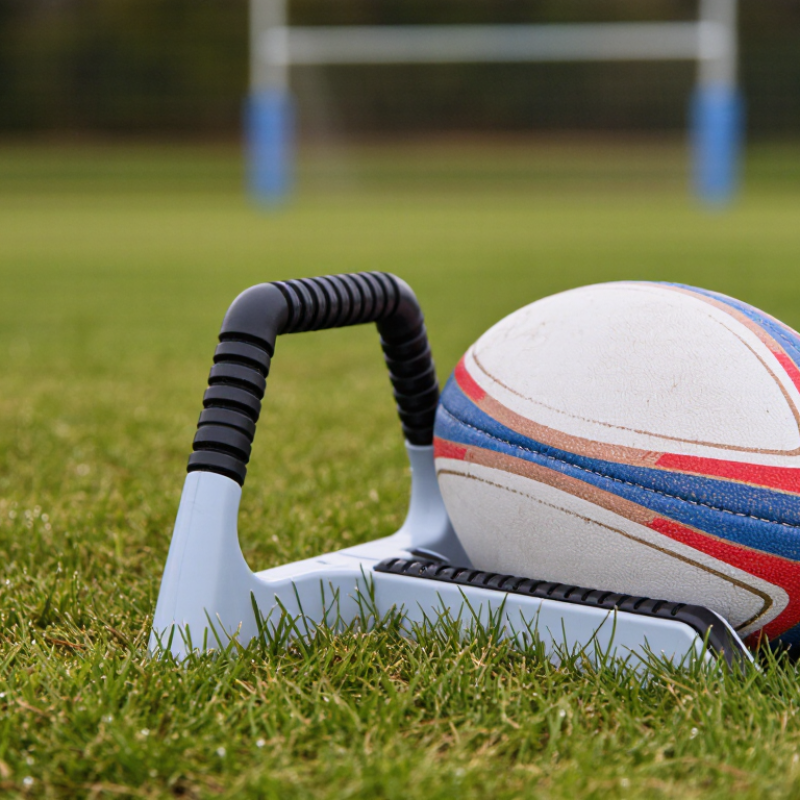
Why Choose Rugby Kicking Tees for Better Kicks?

Understanding How Rugby Kicking Tees Support Place Kicks

A rugby kicking tee gives a place kicker a stable launch point. The ball stays upright and keeps its preferred angle. That matters when pressure rises. World Rugby Law 8 allows a kicker to use a tee for conversions and penalty kicks. The law also requires the kick to follow the correct mark and timing. A tee supports consistency, but it cannot fix poor technique.

In practice, the best tees help players repeat three details: ball height, contact position, and approach rhythm. A slightly raised ball can expose more of the lower panel. This helps the foot strike beneath the ball’s centre. The result is often a cleaner lift and a more predictable flight. World Rugby’s Rugby World Cup 2023 match statistics showed leading goal kickers operating around the 75–90% accuracy range. Small setup differences can therefore influence important points.

Training data should be read carefully. World Rugby’s Men’s 2022–23 Injury Surveillance Report recorded 89 match injuries per 1,000 player-hours. That figure does not prove tees reduce injury risk. It does support controlled, repeatable practice, especially during tired sessions. I have found that a tee feels helpful only when its height matches the kicker’s swing. Too high, and the ball can float. Too low, and contact becomes rushed. Players should test several heights, record successful attempts, and question what changes under wind or fatigue. The tee is a tool, not a shortcut.

Exploring the Different Types of Rugby Kicking Tees

Why Choose Rugby Kicking Tees for Better Kicks?

Rugby kicking tees come in several practical forms. Flat tees suit players who prefer a low ball position and direct contact. Cupped tees cradle the ball, helping beginners create a repeatable setup. Adjustable tees offer more control over height and launch angle.

That flexibility matters. A taller position may support a higher trajectory, while a lower position can encourage a flatter strike. World Rugby’s Laws of the Game require approved kicking tees and regulate their use during conversions and penalty kicks. Coaches should check current regulations before training or competition.

I have found that tee choice changes the preparation routine more than expected. A firm surface, visible ball seam, and consistent placement can reduce small setup errors. However, no tee can repair poor balance or an unstable plant foot.

91 World Rugby’s 2022 Men’s 15s Injury Surveillance Report recorded approximately 91 match injuries per 1,000 player-hours.

The figure does not prove that kicking tees prevent injuries. It does underline the value of controlled, repeatable routines. Players should test each tee on grass, artificial turf, and wet ground. The “best” type is not always the most adjustable. Sometimes, simpler works better. The weakness is personal preference, which coaches may overlook.

Choosing a Tee Based on Ball Placement and Kicking Style

Why Choose Rugby Kicking Tees for Better Kicks?

Choosing a rugby kicking tee should begin with ball placement, not appearance. The tee controls the ball’s height, angle, and stability before contact. A flat placement can suit a low, driven kick. It keeps the striking surface close to the ground. This setup often helps players who prefer a firm, direct swing. Small changes matter.

For a higher contact point, choose a tee that supports the ball at a steeper angle. This position may help a kicker create more lift and distance. It can also suit a smoother, slower approach with a longer follow-through. During training, I test the same kick from several tee heights. The most comfortable option is not always the most accurate one. I have sometimes chosen extra height, then lost control during windy sessions.

Your kicking style should guide the final choice. A quick routine may benefit from a stable tee with simple ball placement. A deliberate routine may allow more adjustment before the approach. Check whether the ball stays still after light contact with the tee. Then observe the first few metres of flight. If the ball rotates unevenly, the problem may involve alignment rather than technique. Reviewing slow-motion footage can expose small errors in foot position and ball angle. A reliable tee supports repeatable practice, but it cannot replace consistent contact.

Using a Kicking Tee to Improve Stability and Consistency

Why Choose Rugby Kicking Tees for Better Kicks?

A kicking tee can make each rugby kick feel more controlled. During practice, it keeps the ball at a repeatable height and angle. That stable setup helps players focus on approach, contact, and follow-through. Without a tee, the ball may shift slightly before contact. Small changes can affect direction, distance, and confidence. A consistent starting position also gives coaches a clearer way to assess technique. They can observe the plant foot, hip movement, and striking point more accurately. Keep it simple.

The tee should support technique, not replace it. Position it on firm ground and check that the ball leans naturally. A slight adjustment may suit different kickers, especially when wind or surface conditions change. I have found that rushing the setup often creates tension in the shoulders. A calm routine works better. Still, a tee will not correct every problem. Poor balance, an unstable plant foot, or an inconsistent swing can remain. Players should practise with and without the tee to test whether their control transfers to match conditions. That reflection matters. If accuracy improves only during tee practice, the routine needs more work. Careful repetition, clear feedback, and realistic kicking drills can gradually build reliable consistency.

Why Choose Rugby Kicking Tees for Better Kicks? - Using a Kicking Tee to Improve Stability and Consistency
Kicking Factor Common Challenge Without a Tee How a Kicking Tee Helps Practical Consistency Check Likely Benefit
Ball stability The ball can roll, tilt, or move slightly before contact. Supports the ball at a repeatable height and angle during the approach. Check that the ball remains stationary until the kick. More repeatable contact between the foot and the ball.
Contact height The contact point may vary when the ball is placed directly on the ground. Creates a consistent starting height for the selected kicking technique. Use the same tee setting and ball orientation during practice. Helps reduce changes in launch angle and strike location.
Approach timing A moving or unstable ball can disrupt the final steps of the approach. Provides a fixed visual reference for the final stride and plant foot. Mark the intended plant-foot position and repeat the same approach. A smoother approach with fewer last-second adjustments.
Ground conditions Soft, uneven, or wet ground can make direct placement less reliable. A stable base can separate the ball support point from minor surface irregularities. Ensure the base sits flat and does not rock before starting the approach. More dependable setup across changing field surfaces.
Ball orientation Small changes in the ball’s position can alter the preferred striking area. Makes it easier to align the ball in the same direction for repeated kicks. Use the same valve or panel reference when setting the ball. Improves repeatability of the intended flight path.
Base grip The tee may slide when the plant foot lands nearby or when the surface is damp. A broad, non-slip base helps keep the tee in its intended position. Test the tee with a rehearsal step before taking the kick. Greater confidence in the setup and plant-foot position.
Practice feedback It can be difficult to determine whether a miss came from setup or technique. Standardizes the ball position so the player can focus on approach, plant, and follow-through. Change one variable at a time and record successful strikes. Clearer technical feedback and more focused training.

Maintaining Your Tee for Reliable Performance

A reliable rugby kicking tee needs care between sessions, not only before a match. In my experience coaching kickers, dried mud changes the tee’s contact points. That small change can alter ball height and launch angle.

Start with a visual check. Look for cracks, softened edges, loose inserts, or a flattened base. Clean the tee with warm water and a soft brush after training. Avoid harsh solvents, which may weaken synthetic materials. Let it air-dry completely before storage. Moisture trapped in a kit bag creates unpleasant surprises.

Keep it flat and away from direct heat. A hot vehicle can distort plastic, even when the damage looks minor. Before practice, place the tee on firm, level turf and test its stability with gentle pressure. World Rugby’s Laws of the Game require kicking tees to meet approved equipment conditions, so inspect dimensions and structure after heavy use. Rules compliance matters.

Performance should remain repeatable. World Rugby’s 2022–23 men’s injury surveillance report recorded about 89 match injuries per 1,000 player-hours. That figure does not prove a tee causes injury, but unstable equipment can add avoidable uncertainty during pressured routines. I still sometimes replace a usable-looking tee too late. That is poor judgment. If the base rocks, the surface feels sticky, or the ball sits differently each session, retire it. Record when the tee was cleaned and replaced. Simple notes reveal patterns that memory misses.

FAQS

How should I choose a kicking tee for my ball placement?

Start with the ball’s position, not the tee’s appearance. A flat setup keeps contact low. It suits a firm, direct swing. Small changes matter.

When is a higher tee useful?

A higher tee raises the contact point and may create more lift. It can suit a slower approach and longer follow-through. Test it in calm and windy conditions. More height is not always better.

How can I match a tee to my kicking routine?

Quick routines need stable, simple placement. Deliberate routines allow more adjustment. Press the ball lightly before moving. It should stay still.

What should I watch during test kicks?

Watch the first few metres of flight. Uneven rotation may show poor alignment. Check your foot position and ball angle. Slow-motion video can expose mistakes.

How often should I clean a kicking tee?

Clean it after training with warm water and a soft brush. Dried mud can change contact points. Let it air-dry fully. Do not store it damp.

What damage means a tee should be replaced?

Inspect cracks, softened edges, loose inserts, and a flattened base. Replace it if the base rocks or feels sticky. Retire it when the ball sits differently. It may still look usable. That can mislead you.

How should I store a kicking tee?

Keep it flat, dry, and away from direct heat. A hot vehicle can distort plastic. Store it outside a wet kit bag. Small warping can change launch angle.

How can I check safety and rule compliance?

Use firm, level turf before practice. Test stability with gentle pressure. Check the tee’s size and structure after heavy use. Follow current governing rules. I sometimes replace equipment too late. That is poor judgment.

Conclusion

Rugby Kicking Tees play an important role in supporting accurate and confident place kicks. By holding the ball at a consistent angle and height, a tee helps players develop a repeatable setup before every attempt. Different tee designs offer varying levels of lift, flexibility, and ball support, so the right choice should match the player’s preferred ball placement, kicking technique, and playing conditions. Some kickers may benefit from a lower, more grounded position, while others may prefer additional elevation for cleaner contact.

Using a kicking tee can also improve stability, balance, and consistency during practice and matches. Players should focus on positioning the tee carefully, aligning the ball with the target, and repeating the same approach each time. Regular maintenance is equally important: clean the tee after use, check it for damage, and store it in a dry place. With the right tee and consistent practice, kickers can build greater confidence and produce more reliable results.


Oliver

Oliver

Oliver is a professional marketing specialist with a strong understanding of the company’s products, services, and market position. Through years of experience in content strategy, customer research, and digital communication, he transforms complex product information into clear, practical, and......