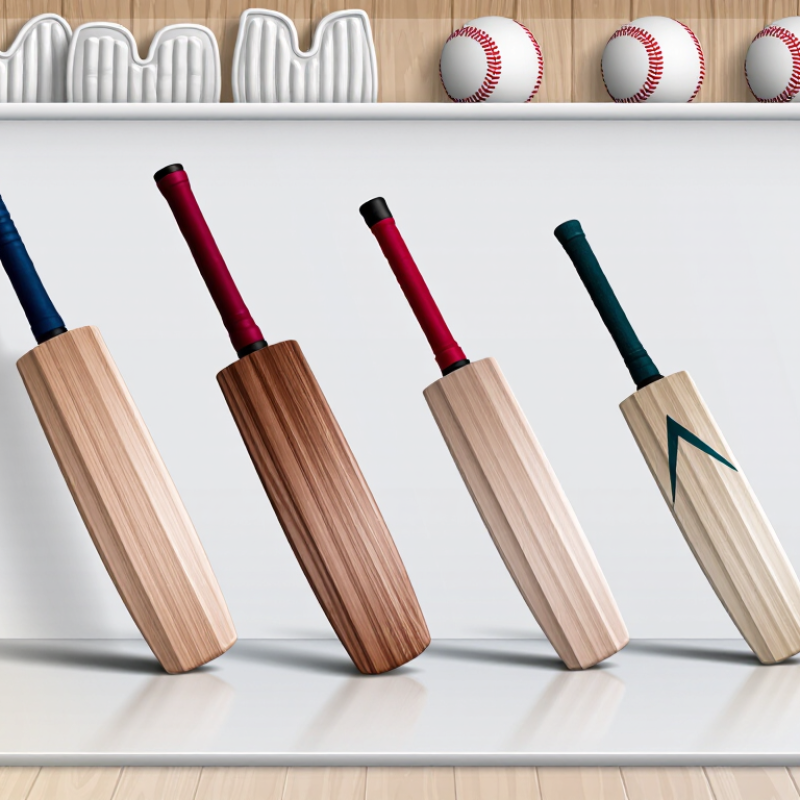
Choosing among Cricket Bats is not simply a matter of appearance. A bat that feels balanced in a shop may feel heavy after fifty deliveries. Players usually compare willow grade, blade profile, handle design, weight, and playing level. These details influence timing, control, durability, and confidence at the crease. Small differences matter.
The main categories include English willow bats, Kashmir willow bats, junior bats, and training bats. English willow is usually selected for its responsive feel and strong performance potential. Kashmir willow often provides a more accessible option for developing players and regular practice. Junior bats use shorter handles and lighter blades for safer control. Training bats may support technique work, warm-ups, or softer-ball practice. Each type serves a different purpose.
This guide explains how these Cricket Bats differ in construction, performance, price, and suitability. It also considers grain appearance, pressing, toe protection, and required maintenance. A well-made bat still needs careful knocking in and sensible storage. Neglect can cause avoidable damage. There is no perfect bat for every player. Even experienced cricketers sometimes choose a bat that looks impressive but feels awkward in their hands. Personal comfort should remain central. Players should check their height, strength, playing format, and competition rules before buying. Expert advice from a reputable cricket retailer can help, although recommendations are not always flawless. Testing the pickup, grip, and swing remains valuable. The right choice should feel controlled, practical, and reliable during real play.
A cricket bat is more than a shaped piece of willow. It is a carefully balanced striking tool. The blade provides the hitting surface, while the handle transfers force from the player’s hands. The splice joins both sections. A rubber grip improves control, especially when palms become sweaty.
MCC Law 5 specifies a maximum bat length of 96.52 centimetres and a maximum width of 10.8 centimetres. It also limits edge thickness to 4 centimetres and overall depth to 6.7 centimetres. The ICC’s 2024 playing conditions refer to these equipment requirements. These figures explain why professional bats often look similar, despite different profiles. English willow usually offers a lighter feel and responsive rebound. Kashmir willow is commonly denser and more affordable. However, grading is not perfectly consistent. A carefully selected bat can outperform a more expensive one.
English willow bats are made from Salix alba, a lightweight wood with responsive fibres. Their edges feel softer, yet the blade can produce powerful shots. Grade labels usually describe grain appearance, knots, blemishes, and pressing quality. They do not guarantee identical performance. That detail is often overlooked.
Grade 1+ willow usually shows straight grains, clean faces, and minimal marks. It suits professional players and advanced club batters who value balance and quick pickup. Grade 1 may contain small blemishes but still offers strong performance. Grade 2 and Grade 3 bats often show more heartwood, knots, or uneven grains. They are practical choices for regular training and competitive club cricket. Grade 4 bats may include visible marks and softer areas. They can serve developing players, school teams, or occasional weekend use.
Mordor Intelligence’s 2025 Cricket Equipment Market report estimates the wider market will grow at approximately 4% annually through 2030. However, published reports rarely separate English willow by grade. That limits precise price or demand comparisons. The International Cricket Council’s equipment guidance also emphasizes bat dimensions, not commercial grade names. Buyers should inspect the grains, toe, handle, and weight distribution. A heavier bat is not automatically stronger.
I have seen players choose beautiful blades that felt slow after ten minutes. A trusted bat specialist should check pressing, moisture, and knocking-in quality before match use.
Kashmir willow bats are made from willow grown in the Kashmir region and nearby areas. Their timber is usually denser than premium English willow. This density can create a sturdy bat with a solid feel in the hands. Makers select clefts, shape the blade, press the fibers, and fit a laminated handle. Grain count matters, but it does not tell the whole story. Straight grains, balanced weight, and clean edges often matter more during play.
In club-net sessions, a Kashmir willow bat can feel reliable against hard practice balls. It may offer a slightly less immediate rebound than softer, higher-grade willow. However, its firmer blade can tolerate regular use and occasional mistimed contact. A careful pressing process improves performance, while excessive pressing can reduce responsiveness. Moisture remains a concern. The bat should stay dry and receive suitable protective care.
Kashmir willow often provides strong value for developing players, casual cricketers, and clubs managing several bats. It usually costs less than top-grade English willow. I once assumed a heavier bat would always produce more power. That judgment was too simple. Timing, pickup, and bat speed changed the result. A lighter, well-balanced Kashmir willow bat may suit a compact player better. Buyers should inspect the handle, toe, edges, and blade balance before choosing. Variations between clefts can be significant.
Cricket bat types vary by playing style and player level, not only by appearance. A beginner often benefits from a lighter bat with a balanced pickup. It helps them control defensive shots and learn a stable backlift. Kashmir willow usually offers a practical starting point because it is generally more affordable and durable. However, quality can vary, so inspect the grain, edges, handle, and overall balance before buying.
Developing players may prefer a mid-weight bat with a fuller profile. This design supports both front-foot drives and controlled back-foot strokes. Players who attack fast bowlers often choose a bat with a lower sweet spot. It can produce strong shots near the toes, especially on slower pitches. Front-foot players may prefer a middle sweet spot for cleaner drives through cover and mid-on. Back-foot players often value a lighter pickup and quicker movement.
Advanced players usually select English willow bats after testing several weights and balances. Softer willow can offer excellent performance, but it may mark more easily. Harder willow can feel less responsive at first. A thick edge does not automatically improve every player’s timing. I once preferred a heavier bat, then noticed my hands arrived late against short bowling. That experience changed my view of power. A coach or experienced bat specialist can assess technique, strength, and playing conditions. Always check local competition rules before using a particular bat size or specification.
Cricket Bat Types by Playing Style and Player Level
| Bat Type | Primary Construction | Typical Playing Style | Recommended Player Level | Main Advantages | Important Considerations |
|---|---|---|---|---|---|
| English Willow Bat | Willow traditionally grown in England; generally softer and lighter than Kashmir willow. | Stroke-makers who value quick pickup, timing, and a responsive feel. | Intermediate to professional players. | Excellent balance, fast handling, and strong performance when properly prepared. | Usually costs more and requires careful knocking-in and maintenance before match use. |
| Kashmir Willow Bat | Willow grown in the Kashmir region; commonly denser and more affordable than English willow. | Developing players, recreational cricketers, and batters seeking durability and value. | Beginner to intermediate players. | Good durability, accessible pricing, and dependable performance for regular practice. | Can feel heavier or less responsive than a comparable English willow bat. |
| Lightweight Bat | A bat designed with a lower overall mass, often using a thinner profile or carefully distributed wood. | Players who rely on quick hands, late cuts, deflections, and rapid bat speed. | Junior to advanced players, depending on size and strength. | Fast maneuverability, easier control, and reduced fatigue during long innings. | May provide less momentum on powerful drives and may have a smaller hitting area. |
| Power-Hitting Bat | Usually features a thick profile, substantial edges, and a pronounced sweet spot. | Aggressive batters who target lofted drives, pulls, and boundary shots. | Intermediate to advanced players with sufficient strength and technique. | High mass behind the ball and strong distance potential when contact is clean. | Can be harder to control, slower through the swing, and tiring over a full innings. |
| All-Round Bat | A balanced shape combining manageable weight, a practical sweet spot, and moderate edge thickness. | Players who need versatility across defensive shots, running between wickets, and attacking strokes. | Beginner to advanced players. | Provides a useful compromise between control, pickup, durability, and power. | May not maximize either extreme: ultra-fast handling or maximum boundary power. |
| Front-Foot Bat | Often balanced toward the middle or lower portion, supporting drives and controlled forward play. | Batters who play straight drives, cover drives, on-drives, and other front-foot strokes. | Intermediate to advanced players with sound forward technique. | Stable contact, controlled swing, and confidence when meeting the ball under the eyes. | May feel less agile for reactive back-foot shots if the pickup is too bottom-heavy. |
| Back-Foot Bat | Often features a higher sweet spot and a balance suited to horizontal-bat or late-contact strokes. | Players who frequently cut, pull, hook, or defend from the back foot. | Intermediate to advanced players. | Quick response against shorter deliveries and effective control during back-foot play. | May be less comfortable for players who mainly use forward defensive and driving shots. |
| Junior Cricket Bat | Scaled-down bat with age- and height-appropriate dimensions and a lighter weight. | Young players learning correct grip, stance, footwork, and bat control. | Beginners and junior players. | Improves control, encourages sound technique, and reduces strain during practice. | The bat should match the player's height and strength rather than being selected only by age. |
| Training or Practice Bat | May use a durable wood construction or a practice-focused design intended for drills and nets. | Players working on repetition, throwdowns, soft-ball drills, or general skill development. | All levels, especially beginners and developing players. | Allows frequent practice without exposing a primary match bat to unnecessary wear. | Not every practice bat is suitable for hard leather-ball impact; check its intended use. |
| Indoor Cricket Bat | Typically lighter and shaped for indoor cricket equipment and the softer indoor ball. | Fast-paced indoor players who need rapid reactions and compact stroke control. | Beginner to advanced indoor players. | Quick pickup, easy maneuverability, and suitable control in confined spaces. | Usually not designed for regular use with a hard outdoor cricket ball. |
Selection note: Bat weight, length, handle type, balance, sweet-spot position, and playing conditions should be considered together. A bat that feels controlled and comfortable is generally more suitable than one chosen only for its profile or stated weight.
Specialized cricket bats help players practise specific skills, but the right choice depends on purpose, age, and playing surface. Training bats may be heavier than match bats, encouraging stronger hands and more controlled swings. Lightweight practice bats can help beginners improve timing without tiring their wrists. A coach should check the player’s grip, stance, and swing before recommending extra weight. Too much weight can create poor habits. I have seen players chase power and lose balance.
Junior bats are designed around a child’s height, reach, and strength, rather than age alone. A shorter bat gives young players better control near the crease. The handle should sit comfortably in both hands, with no forced stretching. The player should lift the bat smoothly and hold the ready position for several seconds. If the blade feels awkward, it is probably too large. Children also grow quickly, so fitting should be reviewed during the season.
Indoor cricket bats usually feel lighter and easier to manoeuvre in confined spaces. Their shape can support quick shots, defensive blocks, and fast reactions against shorter distances. Indoor surfaces may differ, so players should confirm local equipment rules before competing. Soft practice balls are useful for early drills, but they do not copy every outdoor-ball movement. Regular coaches can combine both types of training and watch how the player adapts. That adjustment matters more than appearance.
The blade provides the striking surface. The handle transfers force from the hands. The splice joins both sections. A rubber grip improves control when palms become sweaty.
The maximum length is 96.52 centimetres. The maximum width is 10.8 centimetres. Edges cannot exceed 4 centimetres. Overall depth cannot exceed 6.7 centimetres.
Check the pickup before judging the listed weight. Hold the bat near the handle with one hand. It should feel steady, not head-heavy. Feel matters.
Check the grains, toe, splice, handle, edges, and grip. Look for cracks, soft areas, and poor balance. Straight grains suggest quality, but they do not guarantee performance.
English willow is lightweight and has responsive fibres. It often provides a softer feel and quick rebound. Higher grades usually show straighter grains and fewer blemishes.
No. Grade labels describe appearance, knots, blemishes, and pressing quality. They do not guarantee identical performance. A carefully selected lower-grade bat may feel faster.
Kashmir willow often suits developing players, casual cricketers, and busy clubs. It usually feels denser and more solid. It can handle regular practice with suitable care.
No. Bat speed, timing, and pickup often matter more than weight. I once believed heavier meant stronger. That judgment was too simple. A lighter, balanced bat may produce better shots.
Cricket Bats are carefully designed sporting tools made to balance power, control, comfort, and durability. Their main components include the blade, handle, splice, edges, toe, and grip, with each part influencing how the bat feels and performs. English willow bats are valued for their responsive performance and lightweight feel, while different grades offer options for advanced players, regular club use, or more accessible budgets. Kashmir willow bats are generally known for their solid construction, dependable performance, and good value, making them suitable for many developing and recreational players.
Cricket bat types also vary according to playing style and experience. Front-foot players may prefer bats with a strong sweet spot and balanced weight, while aggressive players often choose thicker edges and greater power potential. Beginners can benefit from lighter designs that encourage control, whereas experienced players may select bats tailored to their technique. Specialized options include training bats for skill development, junior bats with suitable proportions and weight, and compact indoor cricket bats designed for fast-paced play in limited spaces.