Cricket Helmets in 2026 will reflect varied playing conditions, budgets, and buyer expectations. Global purchasers need more than a stylish shell or familiar brand name. They need protection that fits correctly and performs consistently. Reliable product information matters too. This introduction frames the main helmet types for junior players, club cricketers, professionals, wicketkeepers, and training environments. It considers grille designs, shell materials, ventilation, weight, adjustment systems, and compatibility with local equipment standards. Fit matters greatly. A loose helmet can shift when a batter moves quickly. A tight one can create pressure near the temples during a long innings. Small details become important.
The guide takes a practical, evidence-minded approach to purchasing. It compares intended use, impact protection claims, replacement guidance, visibility, comfort, and supplier reliability. Buyers should check current certification details and regional requirements before placing large orders. Standards and availability may differ between countries. That uncertainty deserves attention. Product pages can be incomplete, and respected models may suit one player better than another. No helmet is perfect. A professional-style model may feel heavy for a developing junior. An ultra-light option may offer fewer adjustment features. These recommendations remain useful, but not absolute. They encourage sample fitting, careful inspection, and questions about warranty support before purchase. The goal is safer, more informed selection for cricket communities worldwide in 2026.
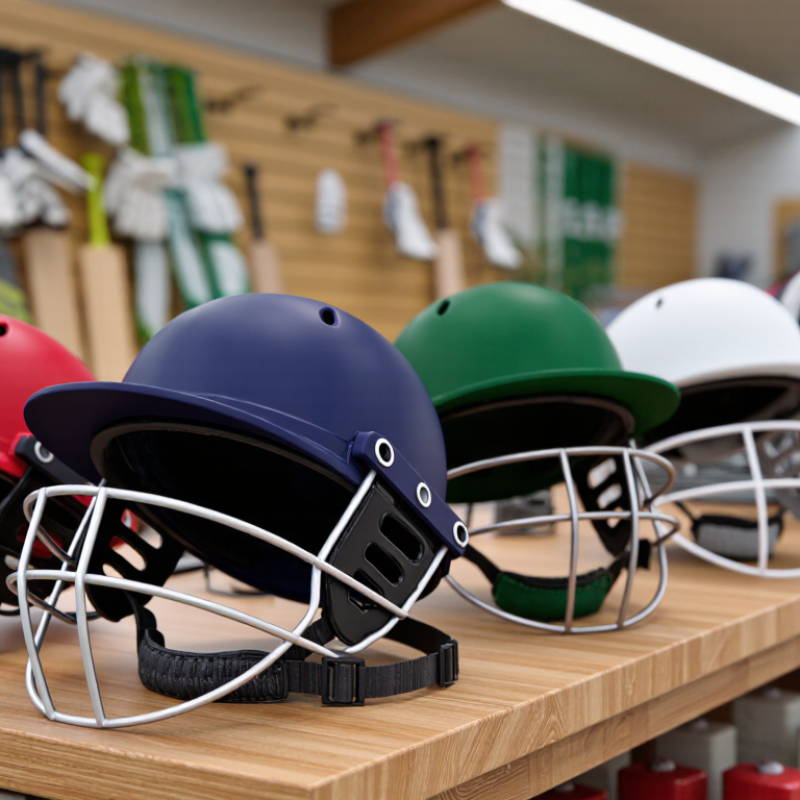
2026 Top Cricket Helmet Types for Global Buyers
Cricket helmets protect the head from fast balls, rising deliveries, and accidental bat contact. They reduce injury risk, but no helmet can remove it completely. A practical fitting check matters more than a fashionable shape. The helmet should sit level, cover the forehead, and stay stable during quick head movement. It must not press painfully against the temples.
Most models combine a hard outer shell, impact-absorbing liner, adjustable straps, and a face grille. Some use lightweight composite shells for easier movement. Others offer deeper rear coverage or stronger grille designs for specialist roles, including wicketkeeping. Ventilation channels help reduce heat, while removable padding can support cleaner maintenance. Small gaps around the grille need attention. A ball must not pass through them.
Global buyers should check the current safety requirements in their selling or playing market. Recognised standards may include BS 7928 and other national specifications, but approval systems differ. Certification markings should be clear and traceable. I would not treat a label as a substitute for inspection. Check the shell for cracks, the grille for bending, and the straps for fraying. Replace the helmet after a serious impact, even when damage looks minor. Fit can change as padding compresses. That detail is easy to overlook.
| Helmet Type | Primary Use | Typical Construction | Protection Coverage | Ventilation and Comfort | Key Buying Advantages | Main Limitations | Relevant Safety Standards | Recommended Buyer Checks |
|---|---|---|---|---|---|---|---|---|
| Traditional Grille Cricket Helmet | General batting, wicketkeeping, and recreational match play | Hard outer shell, impact-absorbing inner liner, adjustable chin strap, and a metal or composite face grille | Protects the top, sides, rear, temples, ears, and face area while leaving an open viewing zone behind the grille | Usually provides good airflow through shell vents and the open grille; removable padding can improve cleaning | Balanced protection, visibility, ventilation, and broad suitability for different playing levels | Fit and grille adjustment are critical; an incorrectly positioned grille can reduce facial protection | Look for conformity with a current cricket-helmet standard such as BS 7928:2013+A1:2019 or ASTM F1045, where accepted by the relevant authority | Confirm shell size, head circumference range, grille clearance, chin-strap security, padding condition, and certification markings |
| Lightweight Training Helmet | Practice nets, junior coaching, throwdowns, and lower-intensity training | Light polymer shell, energy-absorbing liner, ventilation openings, and a protective grille or face guard | Designed to cover the crown, sides, back, and facial impact zone; coverage varies by model | Lower weight and increased airflow can improve comfort during extended practice sessions | Easy to wear for long periods and convenient for schools, clubs, and training programs | Training models must not be assumed to provide the same protection as certified match helmets; reduced padding or coverage may occur | Use only products whose documentation clearly states the applicable cricket-helmet safety standard; do not rely solely on the words “training” or “impact resistant” | Check whether the product is approved for ball-impact use, not just general sports or bicycle use; inspect the grille attachment and liner thickness |
| Junior Cricket Helmet | Children and young players participating in coaching, matches, and school cricket | Smaller shell geometry, adjustable internal padding, chin strap, and a grille designed for a junior head profile | Provides protection around the head and face, with dimensions matched to smaller users | Generally lighter than adult models; multiple adjustment points help maintain a secure fit as the player grows | Better fit and stability for young players than an oversized adult helmet | A helmet that is too large can move during play and leave unsafe gaps; children may outgrow the helmet quickly | Choose a model tested to an applicable cricket-helmet standard and accepted by the child’s governing body, school, or competition | Measure the head according to the manufacturer’s instructions; ensure the helmet does not rock, obstruct vision, or allow the chin strap to slip |
| Wicketkeeper Helmet | Wicketkeeping, especially when standing close to the stumps | Protective shell, impact liner, face grille or visor system, adjustable retention system, and padding around the ears and rear head | Prioritizes coverage of the forehead, sides, rear head, ears, and face while retaining a wide field of view | Ventilation is important because wicketkeepers may wear the helmet for long periods; moisture-managing padding is useful | Supports rapid movement and close-distance protection while allowing the keeper to track the ball | Some designs may be heavier or less ventilated than minimalist training helmets; grille visibility must be checked from the crouched position | Verify compliance with the cricket-helmet standard required by the competition; a general protective headguard is not automatically suitable | Test visibility in the wicketkeeping stance, check rear and ear coverage, and confirm that the retention system remains secure during repeated movement |
| High-Protection Match Helmet | Competitive batting against fast bowling and high-level match play | Rigid impact-resistant outer shell, multi-density energy-absorbing liner, reinforced grille, secure chin strap, and replaceable comfort pads | Designed for extensive coverage of the crown, temples, ears, rear head, forehead, and facial impact area | Vent placement and moisture-resistant liners aim to balance protection with heat management | Offers a robust structure for demanding match conditions and repeated use when properly maintained | Usually heavier and more expensive than basic training designs; extra protection does not eliminate injury risk | Prioritize independently tested compliance with a recognized cricket-helmet standard, such as BS 7928:2013+A1:2019 or ASTM F1045, subject to local rules | Inspect the shell, grille welds or joints, liner compression, chin strap, fasteners, and certification label before purchase and use |
| Composite-Shell Cricket Helmet | Players seeking a low-weight structure with strong shell stiffness for regular competitive use | Fiber-reinforced or advanced polymer composite shell combined with an energy-absorbing liner and face grille | Coverage depends on the design but commonly includes the crown, sides, rear head, ears, and face area | Can reduce shell weight; ventilation depends on the number, size, and location of vents | Good strength-to-weight potential and a stable feel during batting or wicketkeeping | Composite materials can be more expensive; hidden damage may not always be visible after a severe impact | Material type alone does not prove safety; select only a model with documented compliance with an applicable cricket-helmet standard | Ask for test documentation, inspect for cracks or delamination, and replace the helmet after a serious impact or when the manufacturer specifies |
| Adjustable Modular Helmet | Multi-user programs, clubs, academies, and players requiring fine fit adjustment | Protective shell with interchangeable or adjustable padding, adjustable rear fit system, chin strap, and grille assembly | Coverage is intended to remain correctly positioned across a range of approved head sizes | Fit adjustment can improve comfort and reduce movement; removable pads simplify cleaning and replacement | Useful for shared equipment systems and buyers managing several head sizes | Incorrect assembly, missing pads, or loose adjustment components can compromise the intended fit and protection | The complete configuration should be covered by the stated cricket-helmet certification; replacement parts should be approved for that model | Check the size range, locking mechanism, replacement-pad availability, grille compatibility, cleaning instructions, and user-fit procedure |
| Retrofit Face-Grille Helmet | Existing helmet systems designed to accept an approved replacement grille or face guard | Helmet shell and liner paired with a grille attached through specified mounting points and fasteners | Can provide face protection only when the grille, attachment system, shell, and liner are compatible | May preserve the original helmet’s ventilation and comfort characteristics | Allows replacement of worn or damaged face protection without replacing the entire helmet, when permitted | Mixing incompatible parts can create unsafe gaps, weak attachment points, or invalid certification coverage | Use only the grille and mounting hardware approved for the specific certified helmet configuration | Do not drill, bend, weld, or modify the shell or grille; verify that replacement parts retain the original certification status |
Buyer note: Safety standards, competition rules, and accepted certification marks can differ by country and governing body. Always verify the current edition of the applicable standard, confirm local match requirements, select the correct size, and replace a helmet after a significant impact, visible damage, liner deterioration, or according to the manufacturer’s replacement guidance.
Polycarbonate balances impact resistance, weight, and cost. Composite shells may feel lighter. However, lighter does not always mean safer. Inspect the construction carefully.
Expanded polystyrene or expanded polypropylene foam absorbs impact energy. Different densities protect the forehead, temples, and rear head. Small cracks matter. Replace damaged foam promptly.
The grille should resist bending and preserve clear vision. Steel usually offers durability. Titanium can reduce weight. Check spacing, attachment points, and loose bolts.
The helmet should sit level during sharp head movements. It should hold firmly without painful pressure. Shake your head gently. Movement suggests poor fit.
A secure retention system helps prevent shifting during play. Replaceable padding can maintain fit over time. Removable padding also makes cleaning easier. A perfect fit may not last forever.
Requirements differ between markets. Verify current local safety certification before ordering. Look for impact-tested materials and secure chin straps. The label alone is not enough.
Yes, especially in humid playing conditions. Ventilation channels release heat around the head. Sweat can reduce comfort and concentration. Comfort still needs careful judgment.
Measure above the eyebrows and around the widest head area. Try the helmet with your usual cap, when permitted. Do not choose a larger size for future growth. That shortcut can create dangerous movement.
This guide to 2026 Top Cricket Helmet Types for Global Buyers explains how Cricket Helmets protect players from impacts while supporting comfort, visibility, and confidence. It introduces the basic structure of a helmet, including the outer shell, internal padding, grille, chin protection, and ventilation, while highlighting the importance of recognized safety standards. It also compares helmet types designed for batters, wicketkeepers, junior players, and training use, showing how each design can match different playing positions and levels of movement.
The article explores modern protective materials, shock-absorbing features, adjustable systems, and lightweight construction. Global buyers will learn how to select a helmet according to head shape, playing conditions, safety certification, and personal comfort. Practical guidance covers accurate sizing, fit testing, cleaning, storage, regular inspections, and replacement after serious impact or visible damage. By following these recommendations, players and buyers can make informed decisions and choose reliable protection for long-term cricket use.